Your free illustrated & audio chapter
Behind the
Closed Door
What happened when Rumi and Shams withdrew from the world?
Enter the story of their seclusion—and the friendship that changed Rumi’s life. Read the illustrated chapter, or listen in Oliver’s familiar voice.
Free to keep. No payment. No account to create.
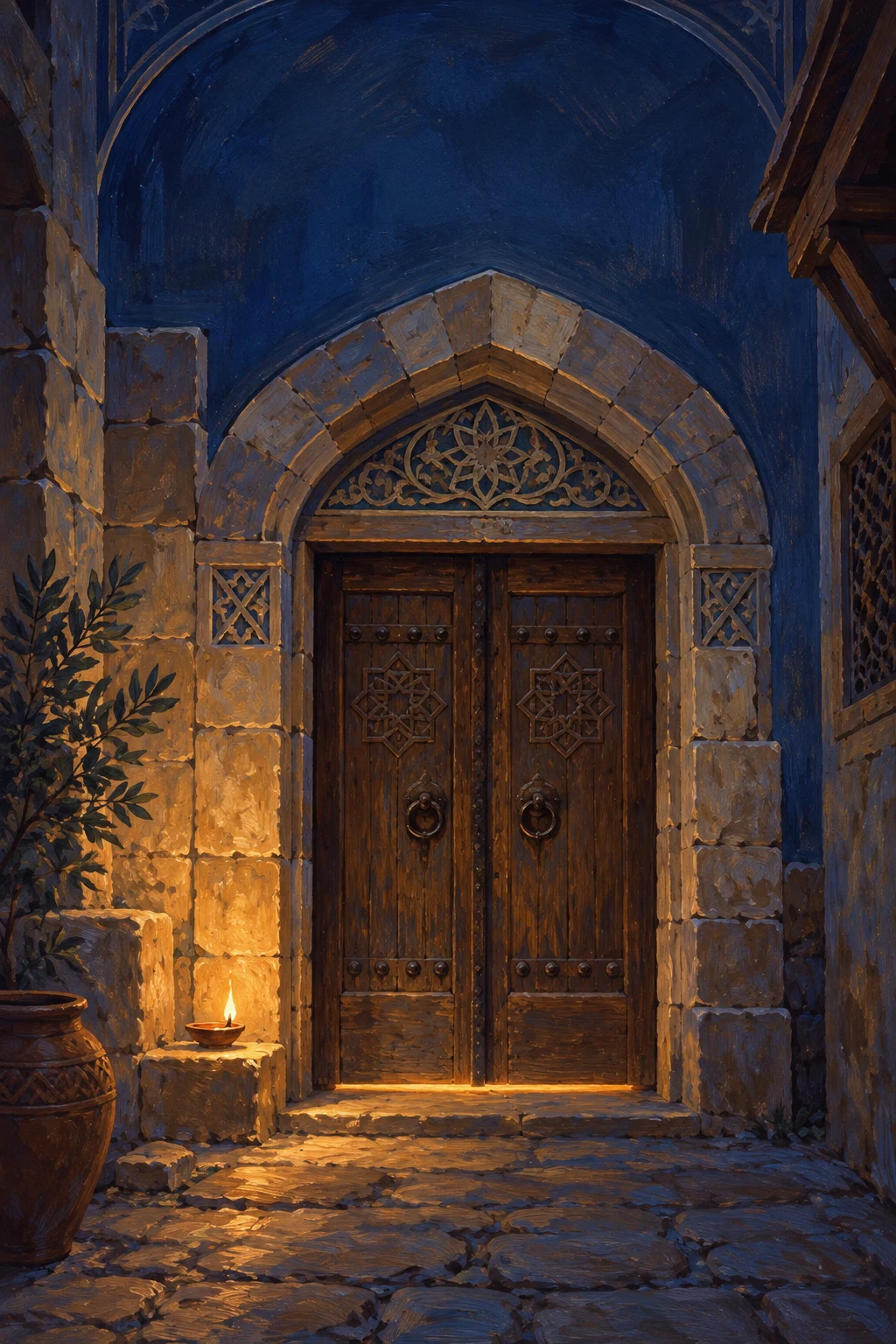
A life about to change.
Listen
A four-minute narrated chapter, with Oliver and the atmosphere of our Rumi series.
Read
An eight-page illustrated PDF, with source notes and a link to the audio.
Keep
Download the PDF and audio. Return to the story whenever you like.
A glimpse inside
The teacher who
became a seeker.
“What could make a respected teacher turn away from the people waiting to hear him, and give his attention to one stranger?”
Rumi already had students, learning and a place in the world. Then Shams arrived. Their companionship would change the rhythm of his days—and leave the people around him asking why.
Get the free chapter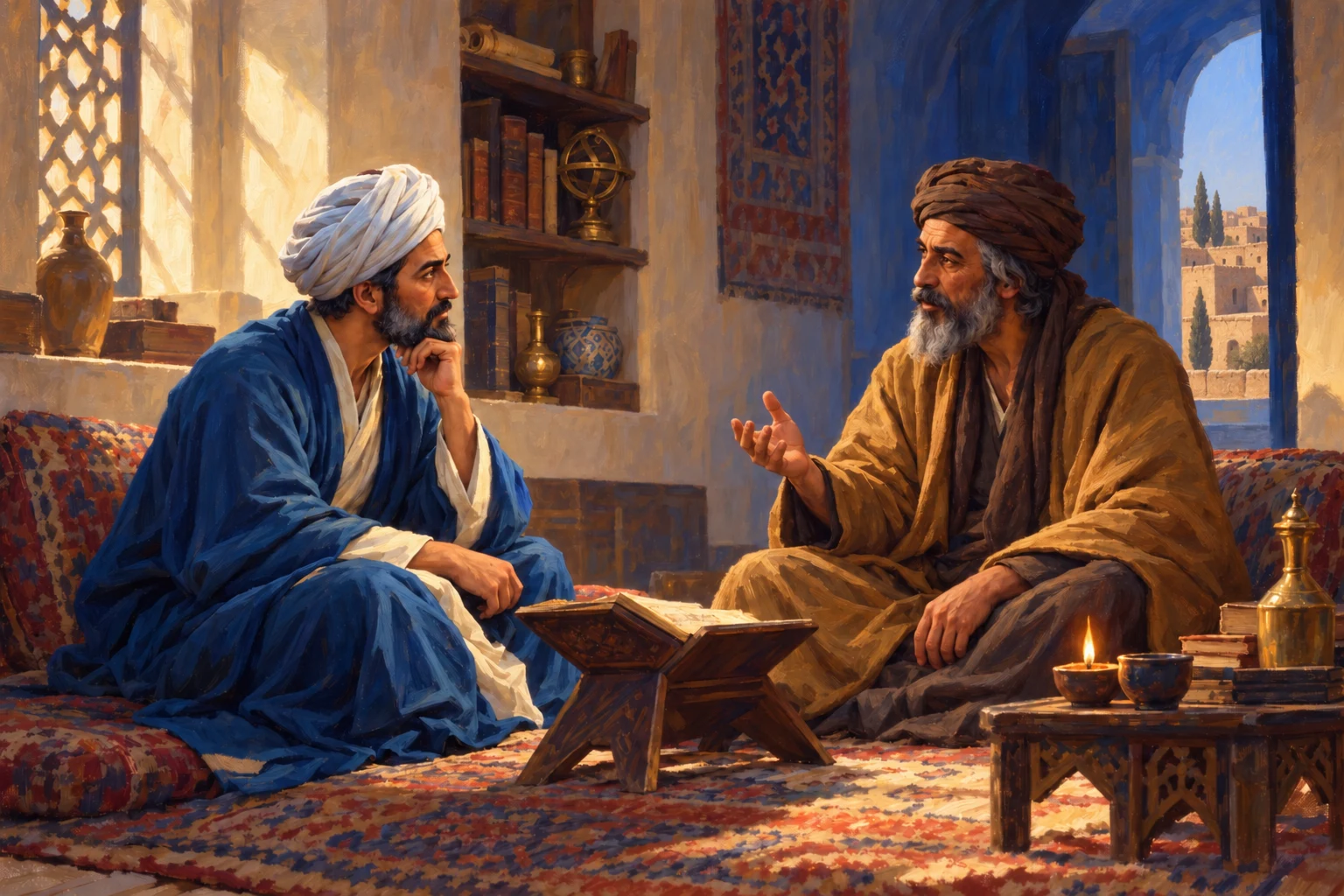
The mystery is real.
The history matters.
We explore what the surviving accounts and teachings can tell us about the seclusion, its spiritual meaning and the upheaval that followed.
There is no verified transcript of everything said in that room. This chapter brings you closer to the encounter without inventing secret conversations. You’ll find our sources at the back.
Before you step inside
What exactly will I receive?
A link to the illustrated reading page with an audio player, an eight-page PDF and a downloadable audio chapter. All three are free.
How do I get the chapter?
Enter your email above. Open the confirmation email and confirm your address. We’ll then send the chapter link. Check Promotions or Spam if it hasn’t appeared after a few minutes.
Can I listen on my phone?
Yes. The player opens in your browser with no login. You can read below it while listening, or save the audio and PDF separately.
Is this the complete Rumi book?
This is a complete short chapter focused on Rumi and Shams’s seclusion. The full Rumi collection is in development. We’ll email subscribers when it is ready; there is no payment or pre-order.
Is the narration AI-generated?
Yes. It uses Oliver, the voice from our Rumi video series. The illustrations are artistic interpretations made with AI assistance, and the historical narrative includes source notes.
Read it. Listen to it. Keep it.
Begin behind
the closed door.
Send me the free chapterYour email stays yours.
Stories of the Soul uses your email to deliver this chapter and send occasional stories and news about future collections. Brevo processes signups and email delivery for us. Every marketing email includes an unsubscribe link. We do not sell your email address.
For access, correction or deletion requests, email aqibmasood234@gmail.com. Our site is hosted by Cloudflare, which processes technical information needed to serve and protect the website. We have not added advertising trackers.