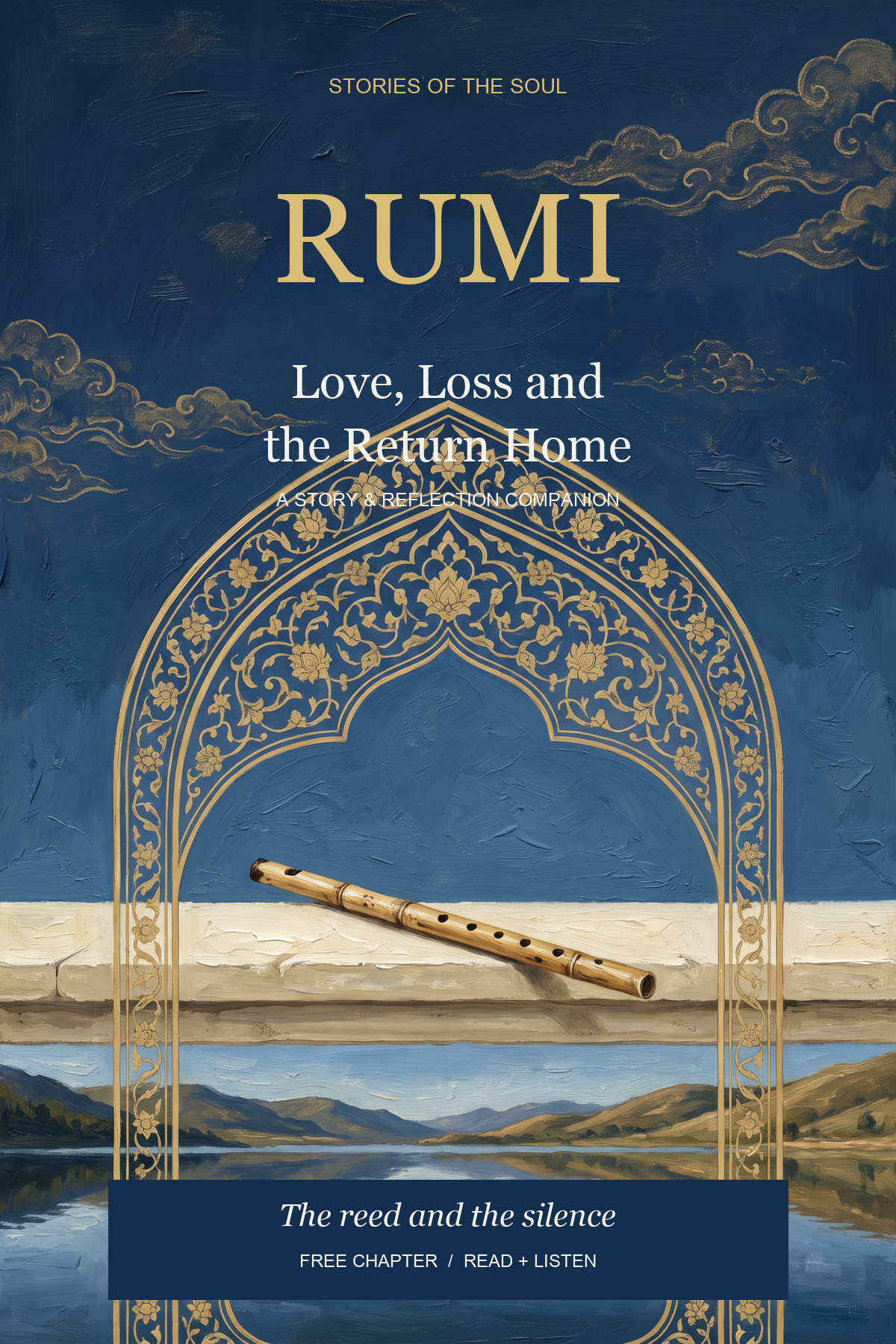
A reed cut from its home. A friendship behind a great poem. An invitation to listen to what longing carries.
Seven illustrated pages. No email required.
Read the transcript
A voice cut from its home
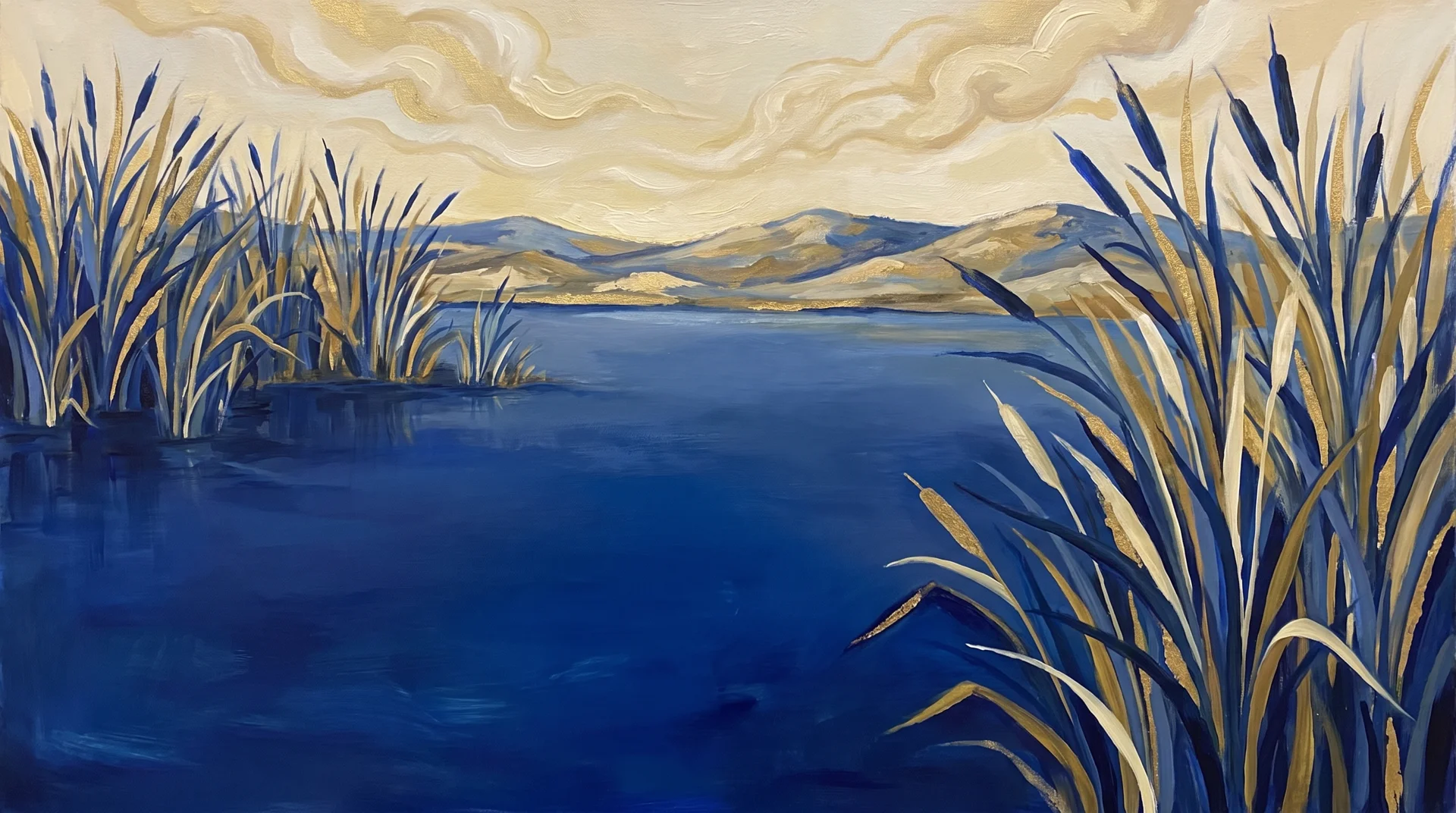
Before there is a story of a king, a traveller or a lover, there is a reed. It has been cut away from the place where it grew. Now breath passes through its hollow body, and the separation becomes a sound.
This is where Rumi begins the Masnavi. Not with an account of his achievements. Not with a promise that life will spare us sorrow. With something small enough to hold in the hands, carrying a longing much larger than itself.
The reed speaks of the bed it came from. People hear it and recognise something of their own experience. But the poem asks for more than a passing listener. It asks for a heart acquainted with separation, a heart that can understand the ache inside the music.
We can enter that image through an ordinary memory. A house we no longer live in. A voice we cannot call back. A friendship that changed the shape of our days. The circumstances differ; the feeling of distance can be immediately familiar.
The friend beside the poem
The poem itself came into being through companionship. In Konya, Rumi had a close disciple named Husam al-Din. Their conversations could continue through the night. Husam encouraged him to compose a long teaching poem, and became its scribe. Rumi dictated; Husam wrote, then reviewed the words with him.
After the first book, their work paused. Husam's wife had died. The man helping to preserve a poem about the soul was living through a loss of his own. Eventually he returned to the work, and the Masnavi continued. Across six books, Rumi repeatedly honoured the companion who helped bring it into the world.
There is something worth staying with here. We often meet a great work as a finished object: a spine on a shelf, a title beneath a quotation. The people and interruptions disappear. Yet this poem reached us through a relationship. Someone spoke, someone listened, and someone took care of the words.
The pause belongs to its history too. We do not have to turn it into a tidy lesson, or pretend to know everything Husam felt. The work stopped. Later, it continued. Both things are part of the story.
What the reed remembers
For Rumi, this longing reaches beyond the loss of a person or a place. He writes within the Islamic Sufi tradition, in which the soul's longing for the Beloved is a longing for God. The reed's music carries that spiritual horizon. Reducing it to romantic heartbreak would make its world smaller.
But neither do we need to force every personal sorrow into an explanation. A poem can give us an image to sit beside before we have words of our own. We can listen without claiming that our experience is identical to the poet's, or that every painful event arrives with a message we must decipher.
Consider the distance between being heard and being hurried. Sometimes we are offered an answer before we have finished speaking. Sometimes we do it to ourselves. We reach for a conclusion because the unfinished feeling is uncomfortable. This chapter offers a different invitation: let the question remain for a moment.
What do you miss? What, within that longing, do you still cherish? And who could listen without asking you to become a different person before the conversation is over?
The book begins with a reed. Behind the book stands a friendship. Perhaps that is enough to carry with us today: a voice, and someone willing to listen.
Original reflections accompany the historical narrative. Sources are in the PDF and below.